
When we think of medication errors, we often picture a wrong pill dispensed or a dosage misread. But what if the most dangerous part of the medication process isn’t the prescription pad or the pharmacy counter—but what happens after the medication is given?
That’s the question Candello’s Analytics Study Group explored in our August 2024 session, diving deep into a decade’s worth of medical professional liability (MPL) data. What we uncovered may surprise you—and it could change how your organization approaches medication safety.
The Medication Process of Care: A New Lens on Risk
Medication-related MPL cases make up just 6 percent of all cases in the Candello national database. But don’t let that number fool you. These cases are disproportionately severe: nearly 30 percent involve patient death, and many more result in permanent harm.
To better understand where things go wrong, the study group applied Candello’s “medication process of care” framework, which breaks the medication journey into five key steps:
- Ordering
- Dispensing
- Administration
- Monitoring and Management
- Other (e.g., unknown allergies or undocumented complications)
This structured approach allowed us to pinpoint not just what went wrong—but when and why.
The Real Risk Lies in the Follow-Through
The data revealed a striking insight: the majority of medication-related claims—and the lion’s share of financial losses—stem from failures in monitoring and managing medications after they’ve been prescribed and administered.
In fact, this step alone accounted for the highest frequency of claims and the highest average total incurred cost—more than double that of any other step.
Why is this phase so risky? It’s where the complexity of patient care meets the reality of fragmented systems, inconsistent documentation, and missed opportunities for intervention. It’s not just about what medication was given—it’s about how well it was tracked, adjusted, and communicated across the care team.
Opioids and Anticoagulants: High Stakes, High Severity
Among the medications most frequently involved in MPL cases, three stood out:
- Narcotics (e.g., opioids): Most common in terms of case volume, especially in ambulatory settings.
- Anticoagulants: Less frequent, but far more costly—often linked to severe outcomes like intracranial bleeding.
- Anti-infectives: Frequently involved in ordering errors, but with comparatively lower financial impact.
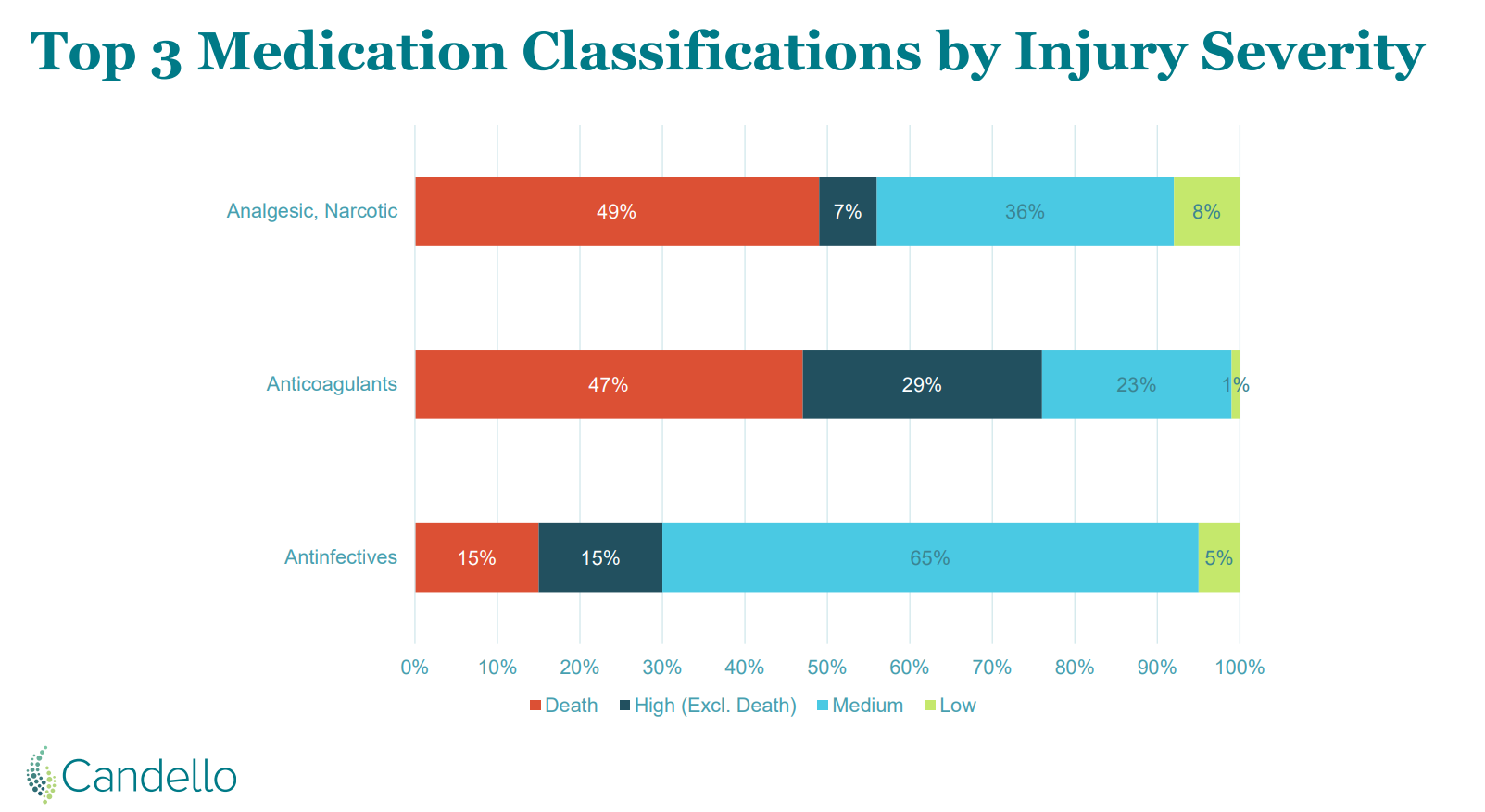
Each of these drug classes presents unique risks depending on where and how they’re used. For example, anticoagulant-related errors were most common in inpatient settings and often tied to communication breakdowns and inadequate monitoring.
Case in Point: When Systems Fail Patients
One case discussed during the session involved a patient with chronic pain who was prescribed opioids by multiple providers across different specialties. Despite red flags—failed toxicology screens, overlapping prescriptions, and a known history of alcohol use—no coordinated plan was implemented. The patient ultimately died of a poly-drug overdose. The case settled for nearly $1 million.
Another case involved a patient recovering from back surgery who wanted to taper off opioids. Despite a plan involving his wife and multiple providers, he died of an overdose just days after his last appointment. The case revealed gaps in communication, lack of toxicology screening, and failure to use prescription monitoring tools.
These stories are tragic—but they’re also instructive. They highlight how even well-intentioned care can go awry without robust systems for monitoring, documentation, and communication.
What’s Driving These Failures?
The study group identified several key contributing factors to medication-related claims:
- Inadequate patient monitoring (40%)
- Poor selection or management of medication regimens (also 40%)
- Insufficient patient education
- Failure to reconcile test results and clinical signs
- Breakdowns in provider communication
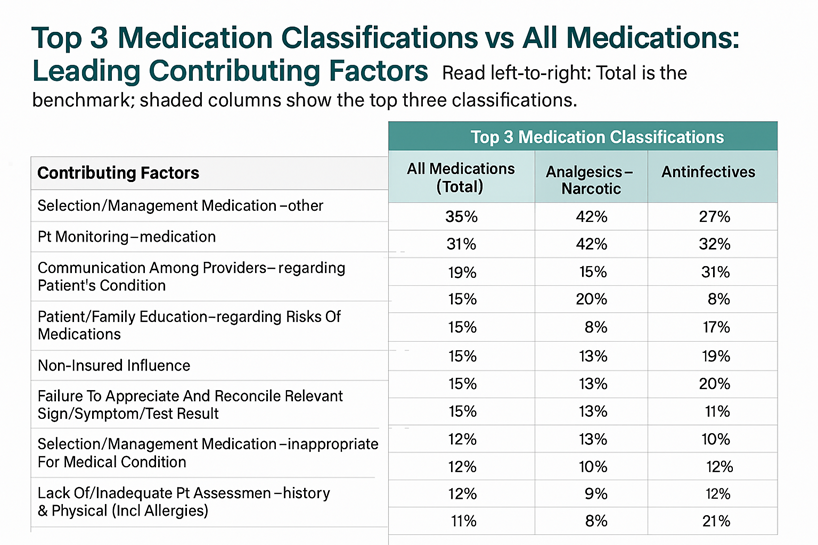
Interestingly, while communication issues are often cited in MPL cases, they were less prominent here. The real culprits were clinical: missed signs, poor follow-up, and lack of clarity around who’s responsible for ongoing medication management.
A Call to Action: Focus on the Right Fixes
If your organization is looking to reduce medication-related risk, the data is clear: focus on what happens after the prescription is written.
- Invest in monitoring protocols: Ensure patients are followed closely, especially when high-risk medications are involved.
- Improve documentation: Capture rationale, patient education, and follow-up plans clearly and consistently.
- Use available tools: Prescription drug monitoring programs, toxicology screens, and pain management agreements can all help.
- Foster team communication: Especially across specialties and care settings.
And perhaps most importantly, use your data. The Candello taxonomy and process-of-care frameworks offer powerful ways to analyze your own MPL cases and uncover hidden risks.
Want More Insights like This?
Join the Candello Community
Join a vibrant community of MPL professionals, analysts, and clinicians—become a member of the private Candello Community.
Because when it comes to medication safety, the real risk isn’t just in the prescription. It’s in what happens next.
Written By